Driving in Heavy Rain

Nolan O'Connor
| 23-06-2026

Driving in heavy rain presents challenges that require increased awareness, careful decision-making, and proper vehicle control.
Reduced visibility, slippery road surfaces, and longer stopping distances can significantly increase the risk of collisions if drivers fail to adapt to changing conditions. By preparing both your vehicle and your driving habits before encountering severe rainfall, you can improve safety, maintain better control, and reduce unnecessary risks throughout your journey.
Reduce Speed and Increase Following Distance
Reducing speed is one of the most effective ways to improve safety during heavy rain. Wet roads provide less traction than dry pavement, making it more difficult for tires to grip the surface. During the first rainfall after a prolonged dry period, accumulated dust, oil, and debris can temporarily make roads even more slippery.
Allow additional space between your vehicle and the one ahead. Increased following distance provides more time to react to sudden stops or unexpected hazards while accounting for the longer braking distances associated with wet road conditions. Avoid sudden acceleration, harsh braking, and abrupt steering inputs, as smooth vehicle control helps maintain traction.
Stay Visible to Other Road Users
Visibility is essential during heavy rainfall. Turn on your low-beam headlights whenever rain reduces visibility, even during daylight hours. Low beams make your vehicle easier for others to see without creating excessive glare, while high beams can reflect off raindrops and further reduce visibility.
Keep your windshield clean and ensure your windshield wipers are functioning properly. Clear windows and effective wipers are essential for maintaining an unobstructed view of the road ahead.

Avoid Hydroplaning
Hydroplaning occurs when a layer of water builds up between the tires and the road surface, causing the tires to lose contact with the pavement. This temporary loss of traction can reduce steering and braking control.
If hydroplaning occurs, remain calm and gradually ease off the accelerator. Keep the steering wheel pointed in the direction you intend to travel and avoid sudden braking or sharp steering movements until the tires regain contact with the road.
To reduce the likelihood of hydroplaning, drive at appropriate speeds, avoid standing water whenever possible, and maintain tires with sufficient tread depth and proper inflation.
Keep Full Control of Your Vehicle
Avoid using cruise control during heavy rain. Maintaining direct control of your vehicle's speed allows you to respond more effectively if traction changes suddenly or road conditions deteriorate.
Pay close attention to traffic, weather, and road conditions throughout your journey. Anticipating potential hazards and adjusting your driving early helps reduce the need for sudden corrective actions.
Know When to Stop
If rainfall becomes so intense that visibility is severely restricted, consider delaying your journey or pulling over in a safe location until conditions improve. Choose a designated parking area or rest area whenever possible, away from moving traffic.
Remain inside your vehicle until visibility improves sufficiently to continue driving safely.
Prepare Your Vehicle Before You Travel
Routine vehicle maintenance plays an important role in wet-weather safety. Before traveling, inspect your tires for adequate tread depth and proper air pressure. Check that your windshield wipers effectively clear water from the windshield and verify that your headlights, taillights, brake lights, and turn signals are operating correctly.
A well-maintained vehicle is better equipped to handle changing weather conditions and can contribute significantly to safer driving.
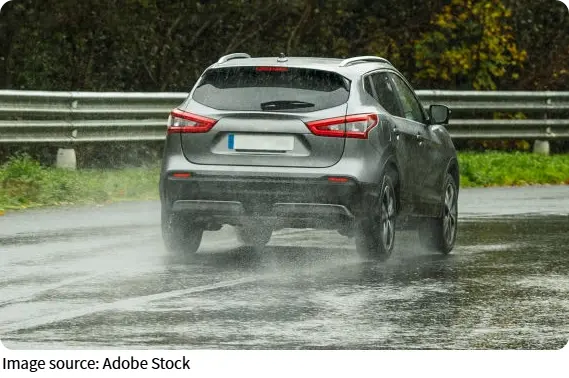
Drive with Confidence and Caution
Heavy rain does not have to prevent safe travel. By reducing speed, maintaining greater following distances, keeping your vehicle in good condition, and responding calmly to changing road conditions, drivers can significantly reduce the risks associated with wet-weather driving.
Safe driving is built on preparation, patience, and sound judgment. Every precaution taken before and during a storm contributes to improved vehicle control, better visibility, and a safer journey for everyone on the road.